Today, 3D printing has revolutionised the way we think about manufacturing objects, opening up a world of possibilities for companies in the industrial sector and many others. Initially, it focused on plastic, but over time, metal gained ground, allowing companies to create complex components that demonstrated unprecedented precision and efficiency. Currently, there is one metal that stands out from the rest, arousing the interest of many due to its benefits: copper.
What is 3D copper manufacturing?
Copper, like metal, uses the same methodology when it comes to 3D manufacturing. This means that the first thing we encounter in this process is copper powder, which will provide us with a reliable partner. At Addimen, we work with two different types of copper: Cu99.99 (pure) & GrCop42 (alloyed).
Once we have the powder and the corresponding design for the part, we simply send it to be printed (SLM) and give it the appropriate post-processing treatment. We must bear in mind that copper is a complex material when it comes to printing, due to its high reflectivity. Even so, it manages to absorb enough energy from the laser to build the part. The result will be a finish with excellent electrical and thermal conductivity that is resistant to corrosion.
Applications of 3D printed copper
- Electronics and electrical circuits: One of the main characteristics of copper is its high conductivity, which is very useful when manufacturing electronic components, such as printed circuits or metal interconnections.
- Automotive industry: Heat exchangers are one of the key components when it comes to copper manufacturing. Thanks to this type of technology, complex geometries can be created and designs optimised, improving efficiency and reducing the weight of the component.
- Aerospace: 3D printing improves performance in aerospace systems thanks to copper’s high thermal conductivity, which is ideal for propulsion systems and cooling electronic components.
- Renewable energy: Due to the implementation of solar panels and wind turbines thanks to the renewable energy movement, additive manufacturing has brought a number of benefits. Thanks to the conductive properties of copper, we are able to improve the electrical systems responsible for energy conversion and transmission.
- Research and development: Additive manufacturing in copper is currently being extensively studied, particularly in the field of prototypes and elements that enable the development of new technologies.
Where is copper 3D printing headed?
As time goes by, 3D technology will continue to evolve, and copper parts are likely to become even more efficient and accessible. Furthermore, the capabilities that additive manufacturing brings to this material will open the door to sectors such as medicine and even advanced electronics.
In summary, advances in this type of technology promise to make metal additive manufacturing faster, more accurate and more sustainable.
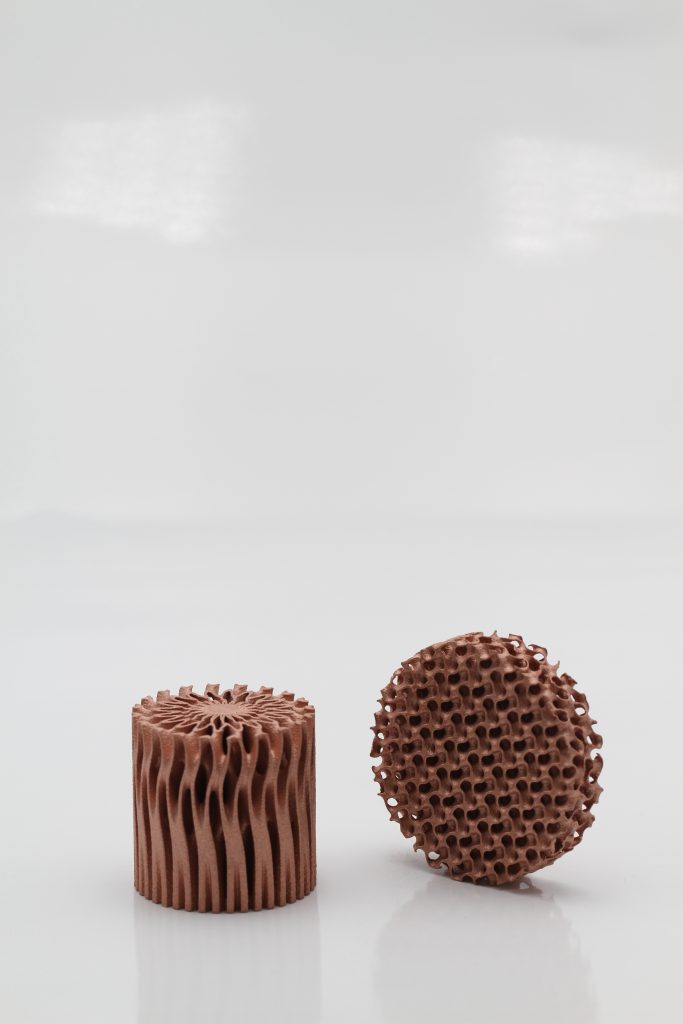
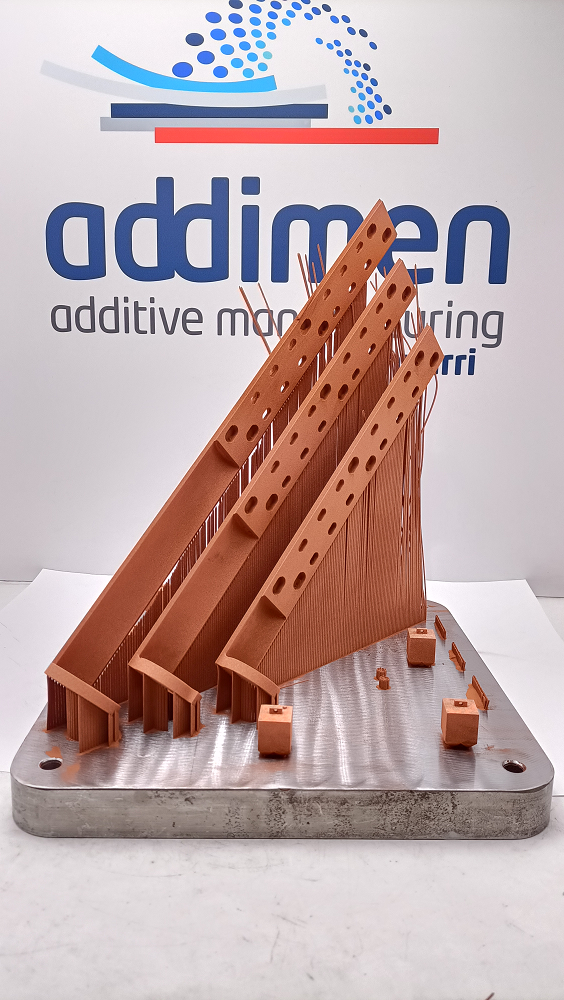
Below you can see examples of work carried out for different clients at Addimen. If you are interested, please do not hesitate to contact us using our form.